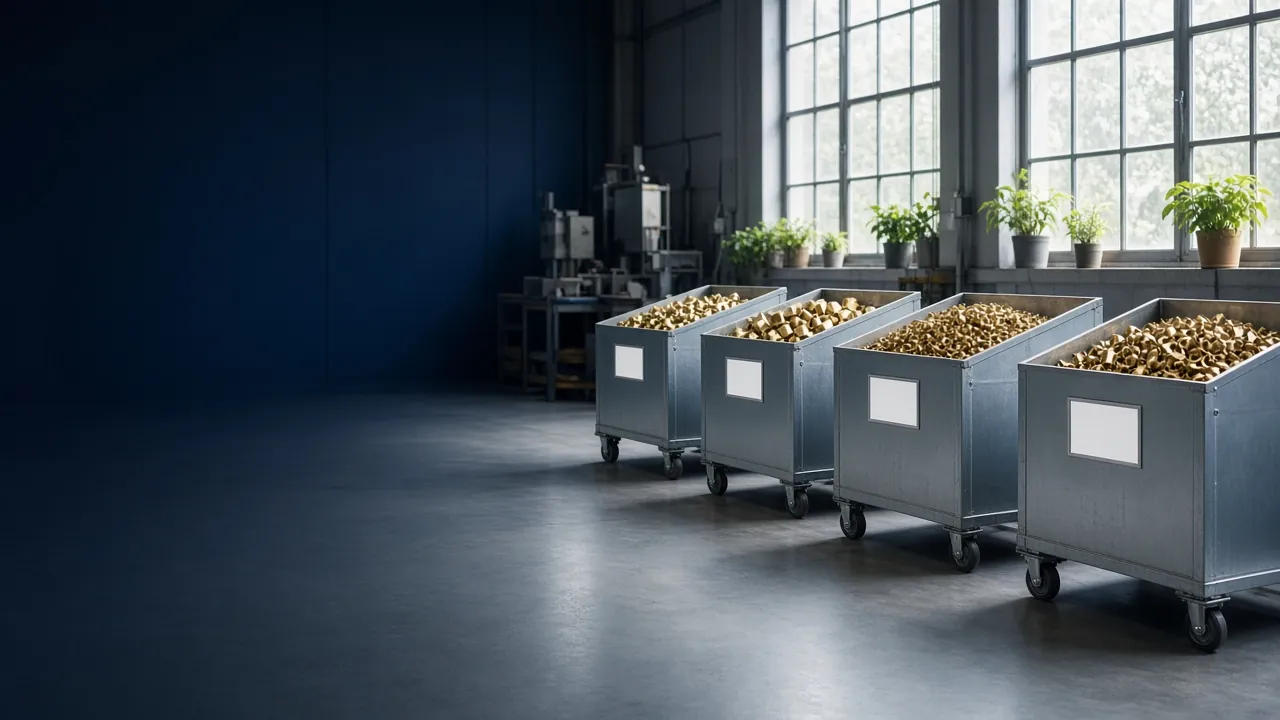
Bins of brass turnings and offcuts sorted for recycling in a daylit factory

Home Company Sustainability

Responsible brass, made to last.

We care about our people, our surroundings and the metal we work with. Doing right by all three is part of making a good part.

Our approach

Our approach to sustainability

“We want every brass part we make to use fewer resources, keep our people safe and give our customers lasting value, with no compromise on quality.”

This is how we think about growth at Parmanand Industries. Better use of metal, energy and water, and a workplace where people can learn and do well, will keep us strong for years to come.

Why brass

A metal that can live many lives.

Brass can be melted and reshaped again and again, and it keeps its strength and machinability each time. A fitting made today could be part of a new fitting years from now.

Endlessly recyclable

Chips, offcuts and worn-out parts can all become fresh brass again.

Long service life

Brass stands up to corrosion, so parts need replacing less often.

Lead-free options

Lead-free grades can be supplied for drinking water and other sensitive uses.

What we commit to

Planet, people and practice.

Our promises fall into three groups. Together they guide daily choices on the shop floor and bigger decisions about how we grow.

Planet

  • Use energy wisely

    Machines don't run idle, older equipment gets upgraded, and we look at cleaner power where it makes sense.

  • Keep brass in circulation

    Usable brass chips and offcuts are collected and sent back for re-melting.

  • Waste less of everything

    We aim to use less raw material, water, coolant and packing on every job.

  • Keep our surroundings clean

    Oils, coolants and waste are handled carefully and in line with local rules.
People

  • A safe place to work

    Machine guards, protective gear and safety habits are part of every shift.

  • Fair and equal treatment

    Pay is based on skill and role. Everyone gets the same chance, and women are welcome in every job on the floor.

  • Room to grow

    Operators learn new machines and skills, so they can take on more over time.

Practice

  • Think before we buy

    Environmental and social impact is part of how we choose suppliers, machines and new processes.

  • Measure and improve

    We keep an eye on scrap, rejections and energy use, and make practical changes where the numbers point.

  • Bring partners along

    We encourage our team and suppliers to use resources carefully and to work ethically.

On the shop floor

Everyday habits that add up.

  • Scrap sorted by grade

    Turnings and offcuts are kept apart by grade, so they can be recycled cleanly and not dumped.

  • Close-to-size stock

    Bar sizes and shapes are chosen close to the finished part, so less metal is cut away.

  • Fewer rejects

    First-off approval and checks during the run mean less rework and less wasted brass.

  • Near-shape forging

    Shaped parts are forged or cast close to size, which uses far less metal than cutting from solid bar.

  • Right-sized packing

    Packing is strong enough to protect the parts without piling on extra layers. We can use your packing too.

  • Short supply routes

    Jamnagar is India's brass hub, so raw material and finishing partners are nearby.

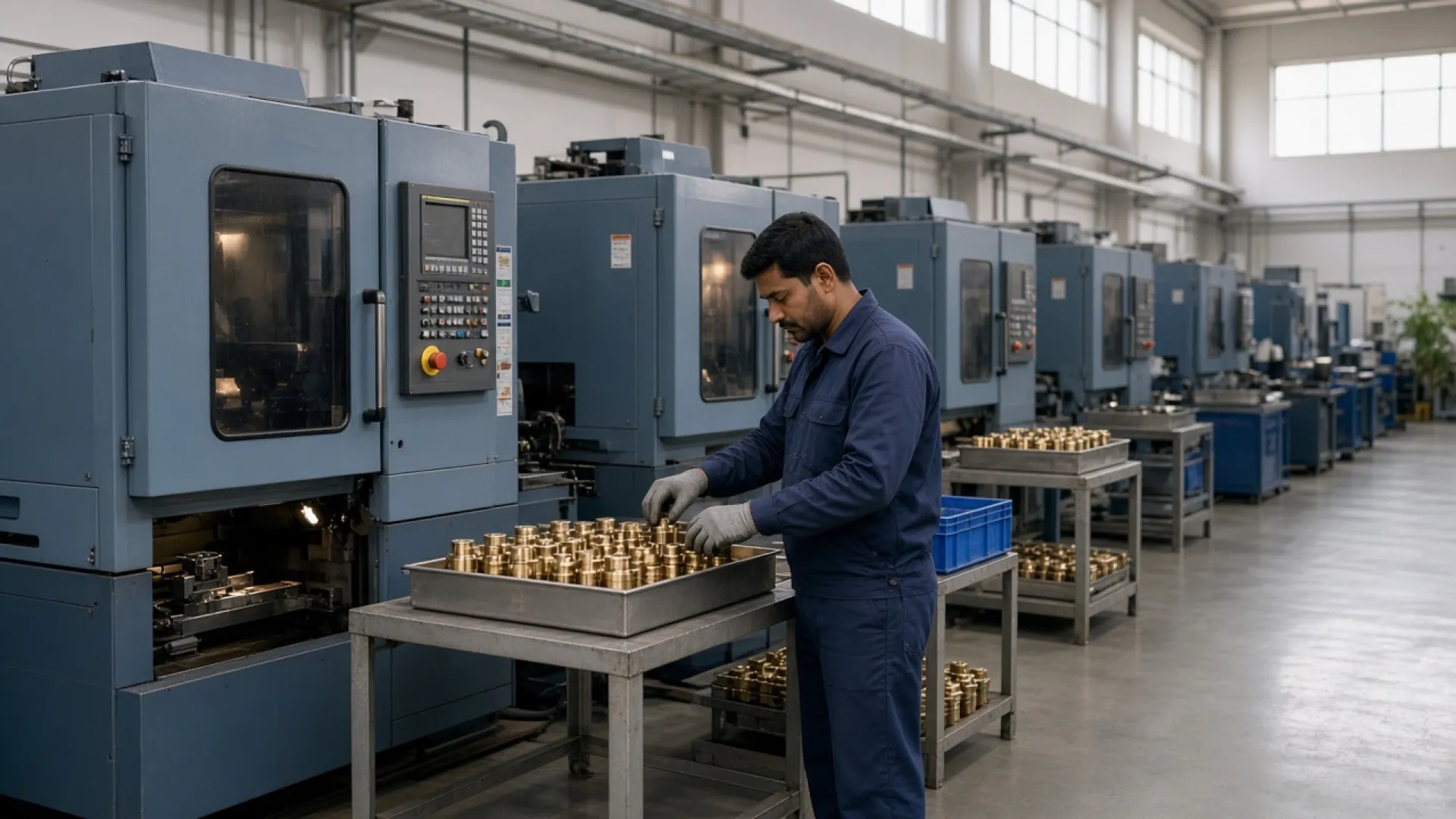
A row of CNC turning machines with trays of machined brass parts

Less waste, fairer prices

Good for the planet, and for your quote.

In most parts, brass is the biggest cost. Using less of it means we can keep your price fair. Find out how we plan material for every order.

Raw Material Optimization

Have a sustainability requirement?

Maybe you need lead-free brass, less packing or details on recycled content. Tell us what your buyers ask for and we'll suggest what fits your part.